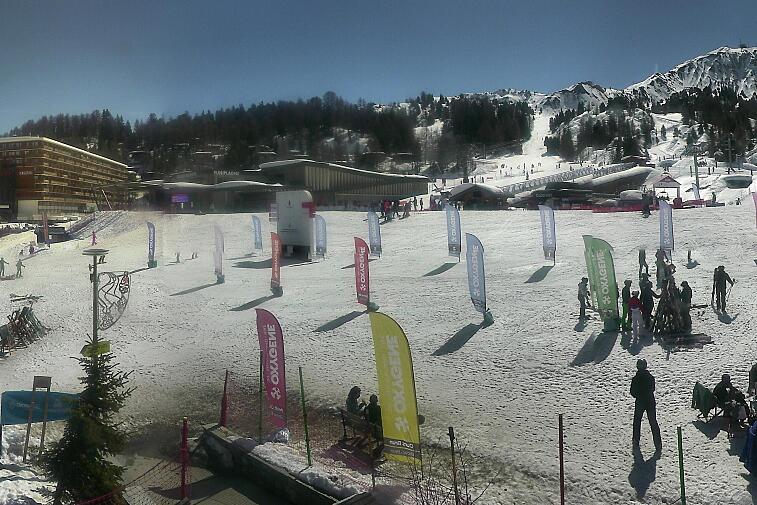
La Plagne is part of the Paradiski ski area, one of the largest in Europe and the second biggest linked ski area in the world. With its modern lift system and wide range of pistes, it's a ski destination that will suit everyone.

Ski Area in La Plagne
Discover the best of the La Plagne ski area
Located in southeast France, in the Savoie department of the Rhone-Alpes region, La Plagne benefits from a mostly southern exposure and is therefore synonymous with sunshine. A snow-sure ski area, with over 70% of the Paradiski region above 2,000m, reliable conditions are ensured. It’s ideal for families and beginners, offering dedicated beginner zones and convenient ski-in/ski-out access. Part of the vast Paradiski area, linked with Les Arcs and Peisey-Vallandry since 2003, it provides extensive terrain for all levels. The resort is also easily accessible by air, train, coach, or car, making travel straightforward for visitors.
The area also includes the resort Peisey-Vallandry, which since 2003 have been linked by the Vanoise Express to the Grande Plagne area, thus forming one of the largest ski areas in France, the Paradiski.
Ski Area Overview
La Plagne consists of six high altitude resorts - Belle Plagne, Plagne Centre, Plagne Bellecôte, Plagne Villages, Plagne Soleil and Aime 2000 (linked by a free public transport service), and the four village resorts of Les Coches, Plagne 1800, Montchavin and Montalbert.
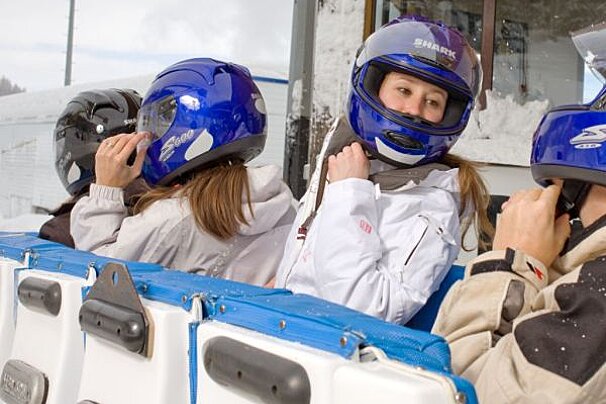
La Plagne offers access to the entire Paradiski area, with 135 pistes served by 74 lifts. Villages cater to all levels, featuring beginner zones, challenging runs, snowparks, off-piste terrain, 80km of cross-country trails, a half-pipe, and France’s only Olympic bobsleigh track.
Belle Plagne and Plagne Bellecôte
From these villages, the Bellecôte gondola provides access to the resort’s highest point at 3,417m, featuring a few red runs, some lower blue runs, and extensive off-piste terrain. Mid-mountain, the Roche de Mio lift offers options to return directly to the village or head toward the top runs in Les Coches and Montchavin, connecting different parts of the resort.
Montchavin and Les Coches
There are six other lifts here linking lots of blue and red pistes, cross-country trails and a few mini freestyle areas.
From here you'll find access to the Vanoise Express, the large gondola that links across to Peisey and Les Arcs.
Plagne Soleil, Plagne Village, Plagne Centre and Plagne 1800
The central cluster of villages offers numerous lifts and gondolas, with the Olympic Bobsleigh track near Plagne 1800. Beginners can enjoy green and blue runs above Plagne Village, while more advanced skiers can explore Les Verdons, Grande Rochette, or cross over into Champagny for varied terrain.
Aime 2000
With its angular buildings jutting out of the ridgeline at 2,000m, it stands out. You can circumnavigate Aime 2000 on a red run and then join the blue piste down to the bottom of the Bobsleigh track below Plagne 1800. Alternatively, head on down the mountain to one of the lowest parts of resort in Montalbert.
Montalbert and Longefoy
Lying at around 1,200m elevation, with four ski lifts, lots of cross-country itineraries, blue pistes and a small freestyle area. The runs are in the trees down here which makes it a good place to be on bad weather days. The main Montalbert lift is a bubble-lift, making it much quick and comfortable.
Champagny
Situated at 1,250m, this village lies just beyond the main La Plagne resort and is connected by its own gondola and four lifts to central La Plagne. It offers a mix of terrain, including tree-lined off-piste routes, blue and red pistes, a slalom area, snowpark, and freestyle zones. Cross-country skiers can venture to nearby Champagny en Haut, making it a versatile choice for all abilities.
Les Arcs
Comprising of four villages - 1600, 1800, 1950 and 2000, Les Arcs has around 200km of piste, a high point of 3,226m and excellent snow-making facilities that guarantee back-to-resort skiing all season long . A haven for intermediate skiers, it's mostly blues and reds.
Ski Area Statistics
| Skiable area | 425km |
| Resort height | 1,800m up to 2,100m |
| Aspect | South and East |
| Highest lift | 3,250m |
| Vertical drop | 2,000m+ |
| Pistes | 225km (La Plagne), 425km (Paradiski) |
| Number of green, blue, red, black pistes | Paradiski: 12 / 135 / 79 / 36 |
| Longest piste | 7km (Mont de la Guerre) |
| Number of lifts | Paradiski: 72 |
Ski Area Opening Dates
The winter season usually runs from mid-December to mid-April, with any early lift openings depending on snow conditions (check ski lift opening dates for this winter's schedule).
Your holiday will be very much determined by the weather and snow conditions, and therefore the time of year you choose to visit is important. If it's sunny pistes and a cold glass of wine on a mountain restaurant terrace, come in March or April. If your perfect ski break is about quiet slopes and lots of fresh snow, then January is the time to come. Or if you want numerous activities organised for your children during their school holidays, February is for you.
Whenever you choose to come, as long as the lifts are open, the local pisteurs will make the best of the snow (real and/or artificial), and groom the pistes to perfection so that you get the best possible conditions.
Linked Ski Areas
La Plagne is part of the vast Paradiski area, one of the largest linked ski regions in the world.
Since 2003, it has been connected to Les Arcs and Peisey-Vallandry via the Vanoise Express, a double-decker cable car spanning the valley. This link gives skiers and snowboarders access to over 425km of pistes across varied terrain, from wide, gentle blues to challenging black runs and off-piste opportunities.
The connection allows seamless skiing between resorts without removing your skis, offering enormous variety for all levels. Together, La Plagne, Les Arcs, and Peisey-Vallandry form one of Europe’s most extensive and versatile ski areas.
Advanced areas in Plagne 1800

La Plagne, part of the vast Paradiski area, offers plenty for advanced skiers and snowboarders despite its reputation for easier piste skiing. The Bellecôte glacier provides challenging black runs like Le Rochu and Bellecôte, while the mogul field atop the Traversée chair and Ski des Bosses offer intense bump skiing.
Above Aime La Plagne, Le Biolley features blacks such as Les Étroits, Morbleu, Les Coqs, and Plsembleu, with Les Étroits being the longest and toughest.
Montchavin–Les Coches has short blacks and accessible off-piste on the Grand Rochette and Les Verdons.
La Plagne alone has 16 black runs, but with Paradiski’s connections to Les Arcs, advanced skiers can explore even more challenging terrain across Europe’s extensive ski area.
Beginner areas in Plagne 1800
La Plagne is ideal for beginners, offering a wide selection of green and blue runs across its various sectors.
Plagne Centre features the improved Zone Débutant, long enough for novices to build confidence before exploring higher slopes.
Plagne Villages and Aime La Plagne have smaller learner areas marked on piste maps, with rolling blues perfect for those ready to progress.
Montchavin–Les Coches, more intermediate, still offers gentle pistes and five free lifts for practice.
Plagne Bellecôte is perfect for relaxed skiing, with numerous wide, gentle blue runs and a large débutant area served by a magic carpet next to the Arpette chairlift, ideal for honing technique all day.
Snowparks in Plagne 1800

The resort has three main snowparks catering to all abilities.
The Small Park, accessed via the Col de Forcle lift, is designed for novices.
The Big Park is a 1km-long snowpark suitable for everyone. A half-pipe, reached from the Blanchets chairlift, is open to all.
Additionally, the Fun Zone, starting from the Arpette chairlift, is Europe’s longest fun slope, featuring jumps, rails, banked turns, rollers, and a spiral tunnel, offering a mix of boardercross and slopestyle challenges for an exciting freestyle experience.
Off-piste areas in Plagne 1800
La Plagne is renowned for off-piste skiing, with terrain that stays fresh longer than many Alpine resorts, including nearby Les Arcs. Its vast area means much remains untouched by lifts, offering excellent powder, especially around the smaller villages.
The glacier is a highlight, with north-face runs like the accessible Petit Face Nord and the more challenging Couloir Canadian.
Other top off-piste areas include Champagny’s Verdons Sud on the Grand Rochette and tree-lined routes at Montchavin/Les Coches, with gentle runs like Les Bauches ideal for beginners.
Vallandry offers views of the steep north face from Les Arcs, where avalanche risks are high.
Always check conditions and hire an off-piste guide, as local knowledge is essential for safe, rewarding skiing in La Plagne.
Bad Weather areas in Plagne 1800
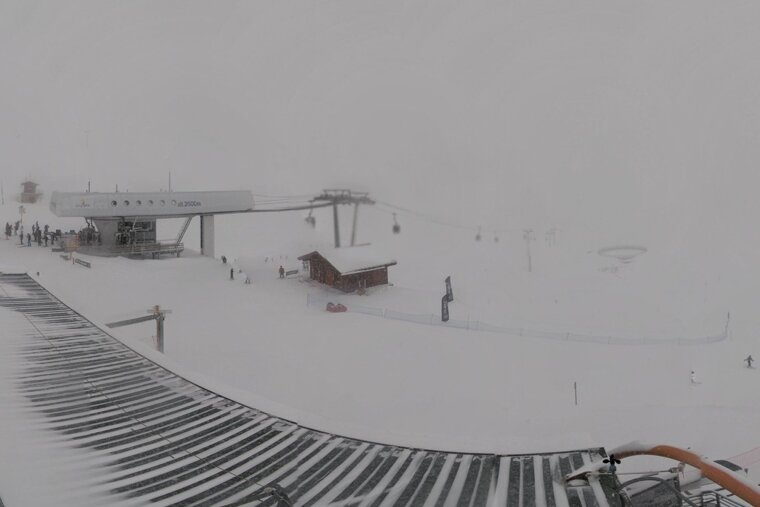
In whiteout or flat-light conditions, high, open pistes can make orientation tricky as slope and sky blend together. The best strategy is to stick to tree-lined runs, which provide contrast and clearer visibility.
La Plagne Montalbert is ideal, with gentle, tree-lined blues that are easy to navigate even in poor weather. Whilst valleys may be foggy, mountain tops can still enjoy sunshine, and rain in the valley often means fresh snow up high, offering excellent powder for adventurous skiers and snowboarders.